There are some places that become even more meaningful when viewed through the eyes of an expert. That was certainly the case during our recent visit to Rutgers Gardens, where a warm 70-degree fall day, brilliant sunshine, and exceptional guidance combined to create an unforgettable experience.
Our tour was led by Maxine Marvosa, Assistant Director of Horticulture, whose passion and extensive knowledge of trees, plants, landscapes, and garden history helped transform a simple walk through the gardens into an educational journey. We would also like to extend our sincere thanks to Moira Keihm, Senior Program Coordinator for Education & Engagement, who organized the tour and helped make this wonderful experience possible.
As we explored the gardens, Maxine encouraged us to slow down, observe our surroundings, and appreciate the purpose and history behind each landscape. Many of us agreed that if we had simply walked the grounds on our own, we would have admired the beauty without realizing the thoughtful planning, environmental benefits, and decades of history that make Rutgers Gardens such a remarkable community resource.
“Every garden has a story,” Maxine explained throughout the tour, helping us understand not just what we were seeing, but why it exists and how it contributes to education, conservation, and public enjoyment.
Discovering the Pollinator Garden
One of our first stops was the Pollinator Garden, a vibrant habitat alive with movement and activity. Bordering Helyar Woods, this carefully curated space provides food and shelter for bees, butterflies, birds, bats, and countless other pollinators. Beyond its beauty, the garden serves as an important reminder of the role these species play in maintaining healthy ecosystems.
Exploring Native and Shade Tree Collections
The tour continued through the Native Tree Collection, where we learned about Rutgers Gardens’ efforts to showcase tree species native to the Mid-Atlantic region and southeastern United States. Maxine explained how native trees support local wildlife while demonstrating sustainable landscaping practices.
Nearby, the expansive Shade Tree Collection featured mature lindens, oaks, buckeyes, magnolias, and other impressive specimens. Walking beneath these towering trees offered a chance to appreciate both their beauty and the valuable environmental benefits they provide through shade, habitat, and carbon storage.
“Many visitors see a tree,” Maxine noted, “but each tree also tells a story about ecology, climate, and the people who planted it.”
A Walk Through History
The Shrub Garden, considered one of the original collections at Rutgers Gardens, offered a glimpse into the site’s rich history. Rutgers Gardens staff and volunteers continue restoration and revitalization efforts, creating pathways through dense yet striking plantings that have been enjoyed for generations.
We also visited the Roy H. DeBoer Evergreen Garden, designed in 1958 by landscape architect and Rutgers professor emeritus Roy H. DeBoer. Filled with pines, firs, cedars, spruces, and other evergreens, this peaceful garden remains a year-round destination for visitors seeking a quiet place to study, picnic, reflect, or simply enjoy nature.
Nature with a Purpose
One of the most fascinating stops was the Rain Garden, a serene landscape featuring shaded pathways, benches, a small pond, and diverse plantings. While beautiful, its purpose extends far beyond aesthetics.
Maxine explained how the garden serves as a model for managing stormwater runoff, replenishing groundwater supplies, reducing localized flooding, and naturally filtering pollutants through native vegetation. It was inspiring to see how environmental stewardship can be integrated so seamlessly into a public garden.
Finding Wonder in Unexpected Places
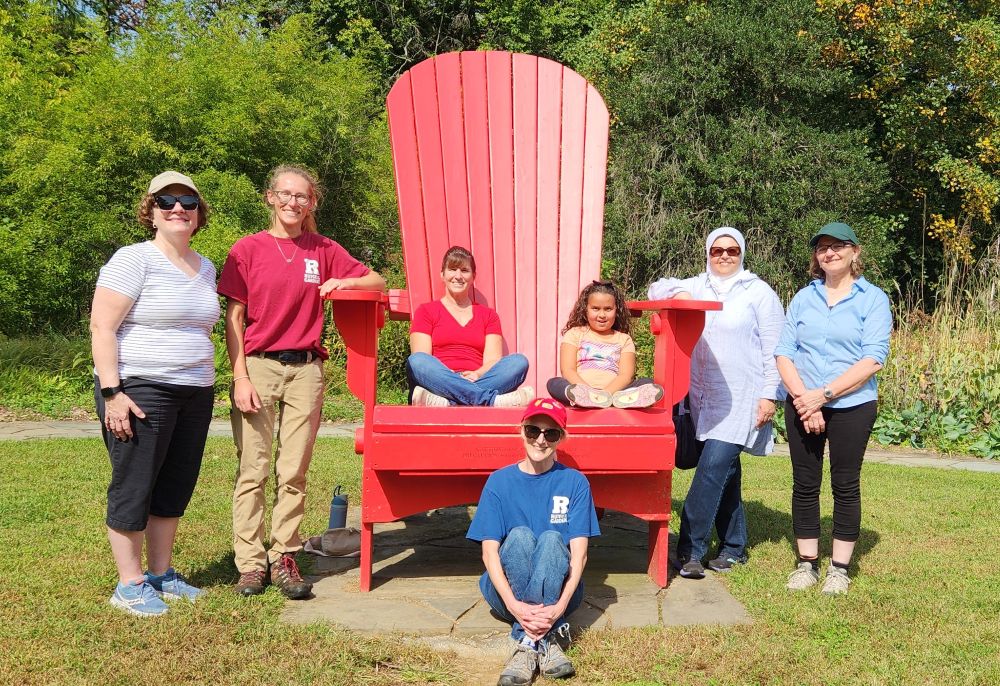
The Edwin J. and Ida M. Otken Memorial Garden quickly became a favorite for many participants. Famous for its oversized Adirondack chairs, the garden combines ornamental grasses, shrubs, perennials, and stone pathways in a setting designed to inspire wellness and rejuvenation.
The giant chairs sparked smiles, photographs, and plenty of conversation. Their larger-than-life scale encourages visitors to see the world with a sense of childlike wonder while emphasizing the positive effects of spending time outdoors.
A Garden Full of Color
Our final highlight was the Donald B. Lacy Display Garden, a colorful showcase designed annually by Rutgers Gardens staff and student horticulturists. Pollinators buzzed among seasonal flowers while visitors admired the vibrant displays of annuals and perennials.
This ever-changing garden demonstrates both horticultural creativity and ecological value, making it one of the most visited and beloved areas within Rutgers Gardens.
Get Involved
Our visit reinforced that Rutgers Gardens is much more than a beautiful destination. It is a living classroom, a center for conservation, a community gathering place, and a valuable educational resource.
If you would like to support the wonderful work happening at Rutgers Gardens, consider becoming involved:
- Volunteer: https://rutgersgardens.rutgers.edu/volunteer
- Support Rutgers Gardens: https://rutgersgardens.rutgers.edu/support
- Group Activities & Tours: https://rutgersgardens.rutgers.edu/group-activities
As we concluded our tour, one thing became clear: Rutgers Gardens is not simply a collection of beautiful landscapes. It is a place where education, history, environmental stewardship, and community come together. Thanks to the expertise of Maxine Marvosa and the coordination of Moira Keihm, we left with a deeper appreciation for the remarkable natural treasures found right here in our own backyard.


